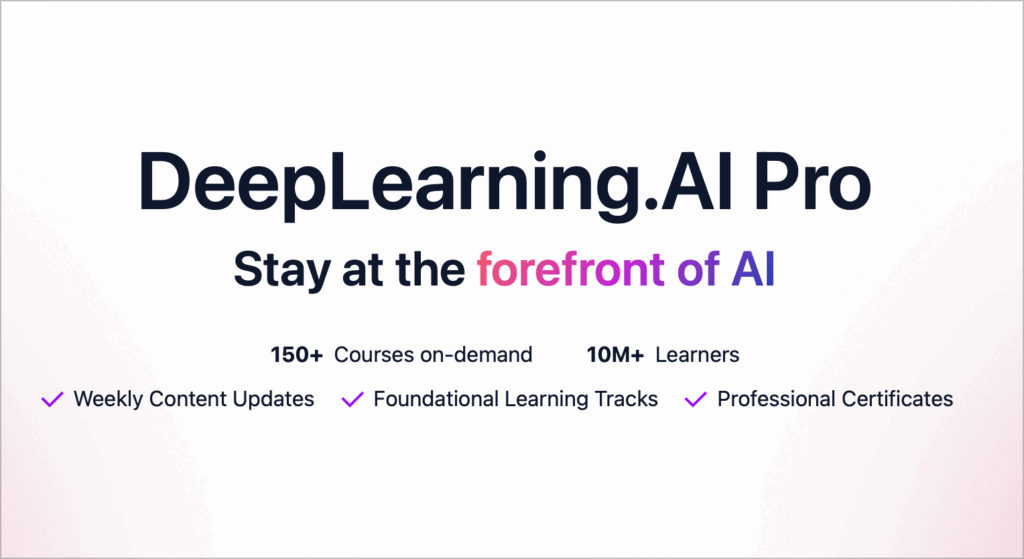
Introducing DeepLearning.AI Pro
With exclusive courses, tools, and community, DeepLearning.AI Pro is the one membership that keeps you at the forefront of AI.
Read MoreWhat is happening at DeepLearning.AI | Read more about company updates, news, and events we are leading for the AI community
With exclusive courses, tools, and community, DeepLearning.AI Pro is the one membership that keeps you at the forefront of AI.
Read More
Neeraj Kumar is driven by a passion for exploring the intersection of artificial intelligence (AI) and robotics.
Read More
Neeraj Kumar is driven by a passion for exploring the intersection of artificial intelligence (AI) and robotics.
Read More
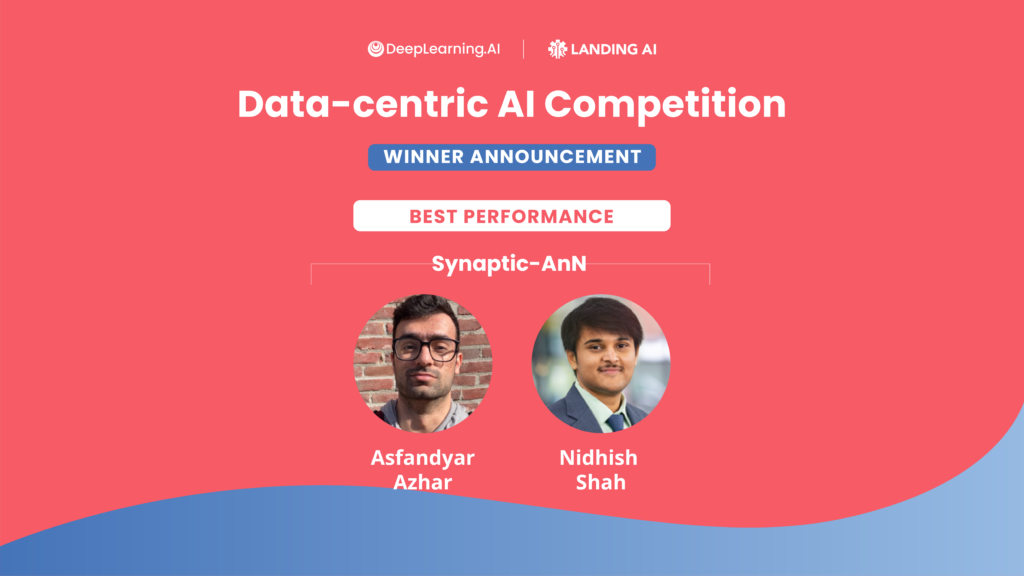
In this blog post, Synaptic-AnN, one of the winners of the Data-Centric AI Competition, describes techniques and strategies that led to victory. Participants received a fixed model architecture and a dataset of 1,500 handwritten Roman numerals. Their task was to optimize model performance solely by improving the dataset and dividing it into training and validation sets. The dataset size was capped at 10,000.
Read More
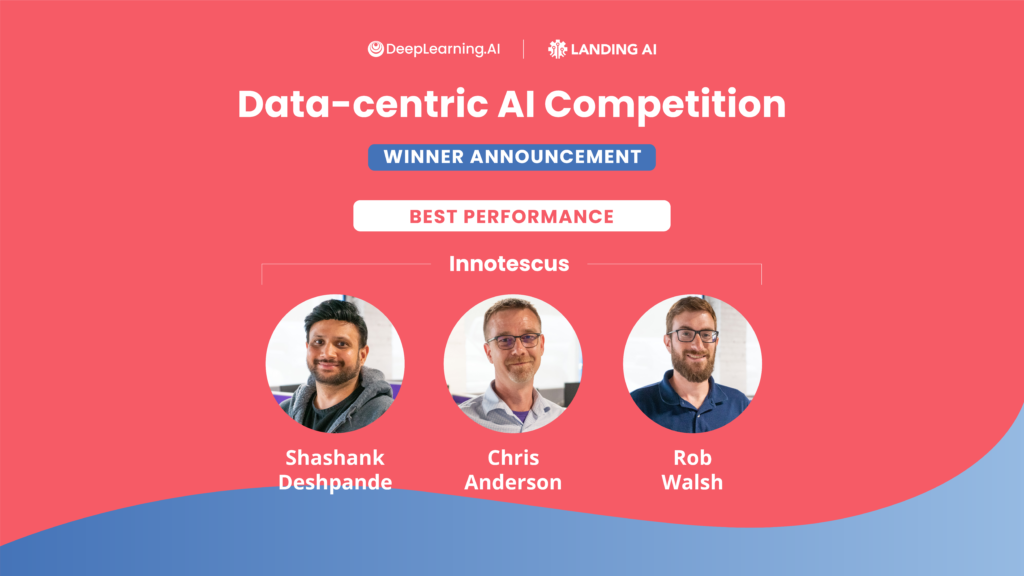
In this blog post, Innotescus, one of the winners of the Data-Centric AI Competition, describes techniques and strategies that led to victory. Participants received a fixed model architecture and a dataset of 1,500 handwritten Roman numerals. Their task was to optimize model performance solely by improving the dataset and dividing it into training and validation sets. The dataset size was capped at 10,000.
Read More
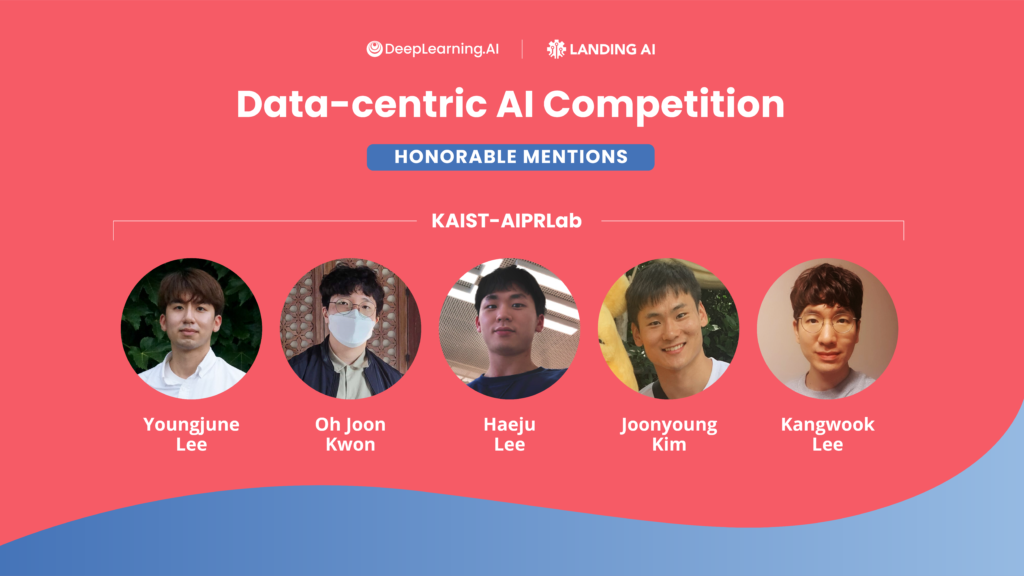
In this blog post, KAIST-AIPRLab, one of the winners of the Data-Centric AI Competition, describes techniques and strategies that led to victory. Participants received a fixed model architecture and a dataset of 1,500 handwritten Roman numerals. Their task was to optimize model performance solely by improving the dataset and dividing it into training and validation sets. The dataset size was capped at 10,000.
Read More
In this blog post, Johnson Kuan, one of the winners of the Data-Centric AI Competition, describes techniques and strategies that led to victory. Participants received a fixed model architecture and a dataset of 1,500 handwritten Roman numerals. Their task was to optimize model performance solely by improving the dataset and dividing it into training and validation sets. The dataset size was capped at 10,000.
Read More
In this blog post, Mohammad Motamedi, one of the winners of the Data-Centric AI Competition, describes techniques and strategies that led to victory. Participants received a fixed model architecture and a dataset of 1,500 handwritten Roman numerals. Their task was to optimize model performance solely by improving the dataset and dividing it into training and validation sets. The dataset size was capped at 10,000.
Read More
In this blog post, Divakar Roy, one of the winners of the Data-Centric AI Competition, describes techniques and strategies that led to victory. Participants received a fixed model architecture and a dataset of 1,500 handwritten Roman numerals. Their task was to optimize model performance solely by improving the dataset and dividing it into training and validation sets. The dataset size was capped at 10,000.
Read More
In this blog post, Pierre-Louis Bescond, one of the winners of the Data-Centric AI Competition, describes techniques and strategies that led to victory. Participants received a fixed model architecture and a dataset of 1,500 handwritten Roman numerals. Their task was to optimize model performance solely by improving the dataset and dividing it into training and validation sets. The dataset size was capped at 10,000.
Read More
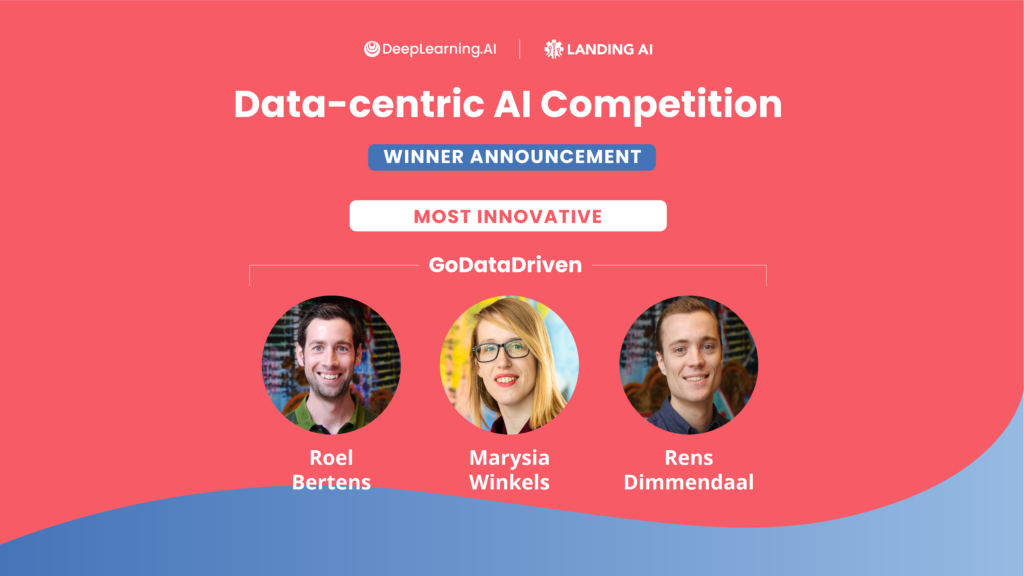
In this blog post, GoDataDriven, one of the winners of the Data-Centric AI Competition, describes techniques and strategies that led to victory. Participants received a fixed model architecture and a dataset of 1,500 handwritten Roman numerals. Their task was to optimize model performance solely by improving the dataset and dividing it into training and validation sets. The dataset size was capped at 10,000.
Read More
Andrew Ng, a computer scientist who led Google’s AI division, Google Brain, and formerly served as vice president and chief scientist at Baidu, is a veritable celebrity in the artificial intelligence (AI) industry. After leaving Baidu, he debuted...
Read More
Dear Friends, I am excited to announce the newest course from deeplearning.ai, “AI for Everyone.” It will be available on Coursera in early 2019. AI is not only for engineers. This non-technical course...
Read More
The co-founder of Google’s deep-learning research team on the promise of a conditional basic income, the need for a skills-based education system and what CEOs don’t understand about artificial intelligence Sentient artificial intelligence may take...
Read More
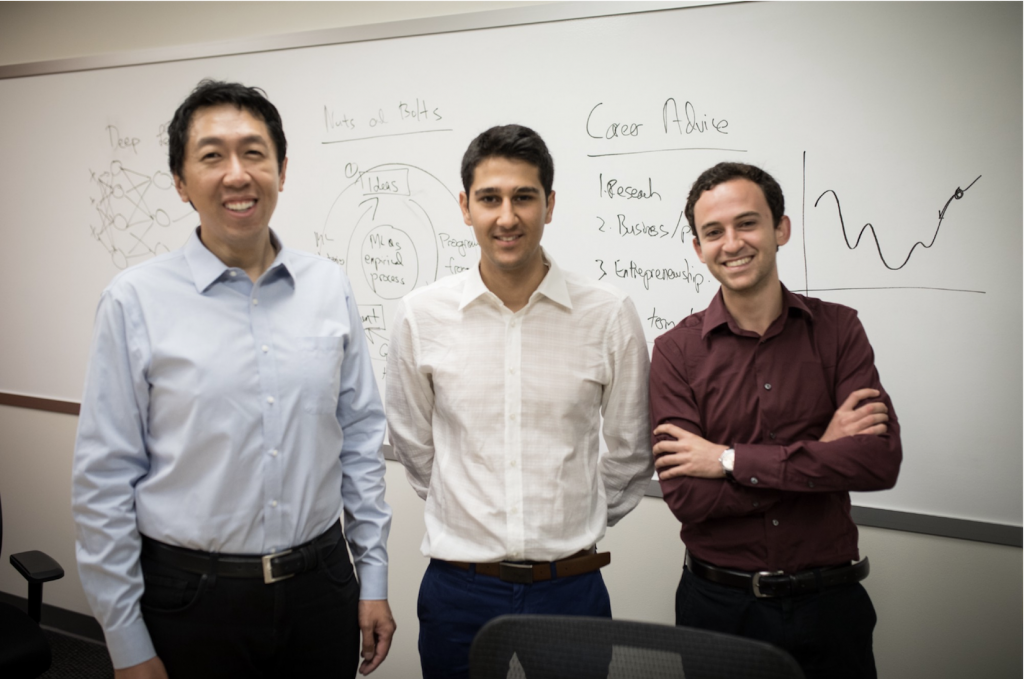
Dear Friends, I have been working on three new AI projects, and am thrilled to announce the first one: deeplearning.ai, a project dedicated to disseminating AI knowledge, is launching a new sequence of Deep Learning courses on Coursera....
Read More